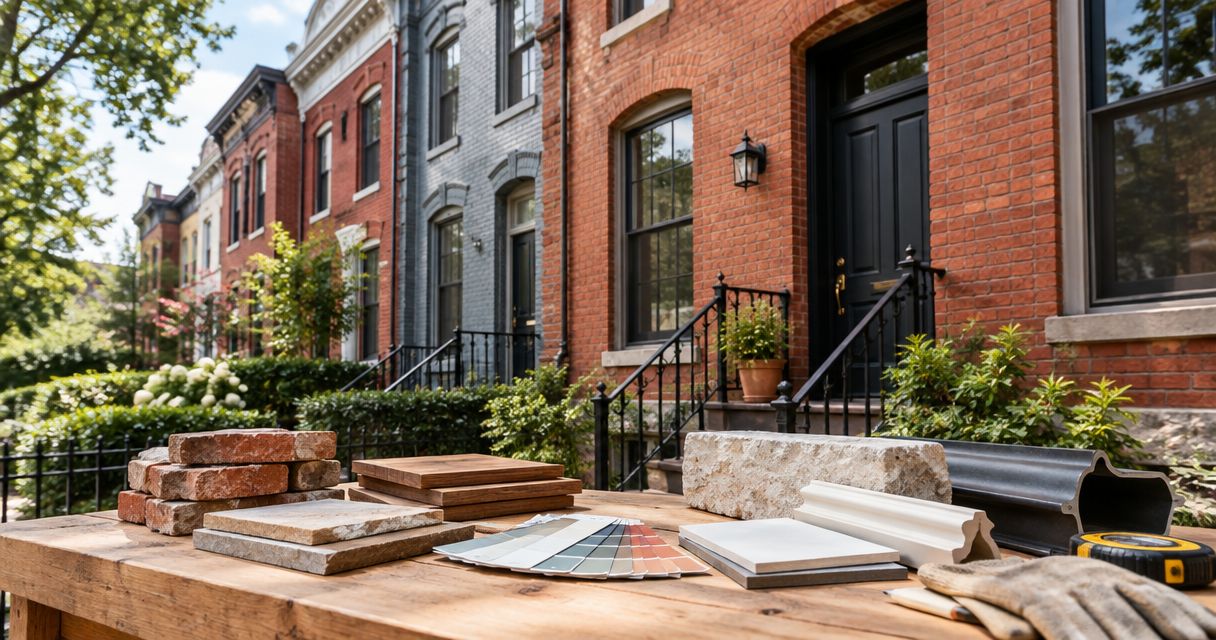
Best overall: sound original brick. Best for repointing: compatible lime-based mortar. Best budget approach: targeted repairs rather than wholesale replacement. For a historic DC rowhouse renovation in 2026, choose materials that preserve existing fabric and work with the building’s masonry, windows, roof, and interior finishes.
- Best materials historic rowhouse renovation DC: retain sound brick and match repair mortar to the existing masonry.
- Repairable solid-wood windows deserve assessment before replacement; material alone does not determine window performance.
- Slate suits repairs to an existing slate roof, not an automatic upgrade for every rowhouse.
- A&E Construction LLC serves DC owners seeking one general contractor to coordinate renovation work.
Why this matters
A historic rowhouse is an assembly, not a collection of interchangeable finishes. Hard mortar beside softer brick, incompatible flashing metals, or a coating that restricts drying can undermine otherwise careful work. Choose each repair material for its relationship to what remains.
A&E Construction LLC provides general contracting across residential, commercial, and government work in Washington, DC and Maryland. Its stated 25 years of experience and single point of contact describe its delivery model; your project scope still needs to establish the preservation requirements, material specifications, and responsible specialists.
For your 2026 project, confirm whether the property is individually designated or within a historic district before ordering exterior materials. DC historic-preservation review depends on the property and proposed work. A material that performs well technically is not automatically acceptable for a particular façade or visible roof.
What makes the best materials for a DC historic rowhouse?
Judge renovation materials against these criteria before comparing individual options:
- Compatibility: Repair mortar, brick, wood, and metals must work with adjacent original materials rather than damage them.
- Repairability: Favor components that permit localized maintenance without removing sound surrounding fabric.
- Moisture behavior: Consider how rain enters, how assemblies drain, and where they dry. A surface treatment does not replace drainage repairs.
- Historic match: Compare dimensions, texture, profiles, color, joint tooling, and installation pattern—not just the material name.
- Project suitability: Separate visible historic features from concealed work, and confirm the applicable review requirements.
- Installation quality: Require a written specification and an accepted sample before repeating the work across the building.
Approve 1 masonry sample panel before full repointing. Review the proposed mortar, joint profile, and cleaning method together. A bagged product label cannot show how the finished repair will look beside weathered brick.
Materials at a glance
| Rank and material | Best for | Standout feature | Key limitation |
|---|---|---|---|
| 1. Sound original brick and compatible replacement brick | Historic façade repairs | Preserves the existing masonry character | Replacement brick still needs a physical and visual match |
| 2. Compatible lime-based mortar | Repointing older brickwork | Can accommodate softer historic masonry | The mix requires assessment; lime content alone is insufficient |
| 3. Repairable solid wood | Windows, doors, and exterior trim | Allows localized repairs and profile matching | Requires sound detailing and regular maintenance |
| 4. Matching natural slate | Repairs to existing slate roofs | Individual units can be replaced | Roof condition and compatible replacement slate must be assessed |
| 5. Compatible plaster | Historic interior walls and ceilings | Retains established surfaces and details | Loose plaster and concealed moisture need diagnosis |
| 6. Compatible sheet metal | Flashings and water-shedding details | Can be formed around roof junctions | Mixed metals and poor joints create failure points |
| 7. Compatible mineral coatings | Previously coated masonry where appropriate | Can provide a vapor-permeable finish | Not a default treatment for unpainted historic brick |
1. Original brick: best for preserving a historic façade
Sound original brick is the first choice for a historic rowhouse façade because it already establishes the wall’s dimensions, texture, and appearance. Retain it wherever repair is practical. Where replacement is necessary, select brick that matches both the visible character and the existing masonry’s physical properties.
Salvaged brick is not automatically compatible. A close color match does not establish comparable absorption, strength, or suitability for exterior exposure.
Original brick pros:
- Preserves existing façade character and masonry patterns.
- Avoids removing sound material unnecessarily.
- Allows repairs to concentrate on damaged areas.
Original brick cons:
- Deteriorated units need individual assessment.
- Matching replacement brick requires more than visual selection.
- Aggressive cleaning can damage the brick surface.
Best for: Localized façade repairs where much of the original masonry remains sound.
The National Park Service’s Preservation Brief 1, Assessing Cleaning and Water-Repellent Treatments for Historic Masonry Buildings, supports cautious cleaning and treatment selection. Specify the cleaning method alongside the replacement brick, not after installation.
Verdict: Buy compatible replacement brick only for units that need replacement; retain sound originals.
2. Lime-based mortar: best for compatible repointing
Compatible lime-based mortar is a strong candidate for repointing older brickwork, but the correct formulation depends on the existing wall. The repair mortar must suit the masonry’s strength, moisture behavior, and exposure. Do not specify a mix solely because its packaging says it is intended for historic buildings.
The National Park Service’s Preservation Brief 2, Repointing Mortar Joints in Historic Masonry Buildings, explains the importance of mortar compatibility and matching the original joint appearance. Hard, incompatible repair mortar can contribute to deterioration of softer masonry.
Lime-based mortar pros:
- Can be formulated to suit softer historic brick.
- Supports matching joint texture and color.
- Allows localized joint repairs without rebuilding the wall.
Lime-based mortar cons:
- Requires appropriate preparation, installation, and curing.
- A generic mix is not suitable for every historic wall.
- Poor joint removal can damage adjacent brick.
Best for: Deteriorated mortar joints in older masonry after assessment of the existing brick and mortar.
For a 2026 specification, identify joint preparation, mortar composition, sand, finish, and curing requirements. Photograph and approve the sample panel before work expands.
Verdict: Buy a specified compatible mortar; skip a one-mix-fits-all approach.
3. Solid wood: best for repairing windows, doors, and trim
Repairable solid wood is the preferred starting point for existing historic windows, doors, and trim. Sound sections can remain while damaged areas receive localized repairs. Replacement pieces should reproduce the relevant profile, dimensions, and assembly details.
Window decisions also involve glazing, weatherstripping, hardware, installation, and any proposed storm-window system. Replacing wood with another frame material does not, by itself, resolve air leakage or water entry.
Solid wood pros:
- Supports localized repairs instead of complete removal.
- Can reproduce established molding and sash profiles.
- Retains original joinery where it remains serviceable.
Solid wood cons:
- Needs maintenance and protection from persistent moisture.
- Concealed decay can extend beyond visible damage.
- Custom profiles require careful measurement and workmanship.
Best for: Historic windows, entry doors, cornices, and trim with repairable original fabric.
Preservation Brief 9, The Repair of Historic Wooden Windows, provides a framework for evaluating and repairing existing wood windows. Inspect the component before deciding that replacement is necessary.
Verdict: Buy matching repair stock; hold full replacement until the existing assembly is assessed.
4. Natural slate: best for an existing slate roof
Matching natural slate belongs on the shortlist when the rowhouse already has a slate roof. An assessment must distinguish isolated slate damage from wider problems involving fasteners, flashings, or the supporting roof assembly. Replacing a few visible pieces does not address every source of leakage.
Slate is not a universal recommendation for DC rowhouses. Specify it in relation to the existing roof, its structural support, historic appearance, and repair needs.
Natural slate pros:
- Allows individual damaged units to be replaced.
- Retains the character of an existing slate roof.
- Supports matching the established roof pattern.
Natural slate cons:
- Requires specialist assessment and installation.
- Matching thickness, dimensions, and appearance takes care.
- Sound slate does not compensate for failed flashings or fasteners.
Best for: Targeted repairs to an existing historic slate roof.
Preservation Brief 29, The Repair, Replacement, and Maintenance of Historic Slate Roofs, addresses these distinctions. Evaluate the roof as an assembly rather than judging it only from the sidewalk.
Verdict: Buy matching slate for a diagnosed repair; skip slate as an automatic roof upgrade.
5. Plaster: best for retaining historic interior finishes
Compatible plaster is the strongest choice when historic walls, ceilings, or decorative details remain repairable. First determine whether the problem is a surface crack, loss of attachment, substrate movement, or moisture. Each condition calls for a different repair scope.
Drywall serves a different role and is not a like-for-like replacement for every historic plaster assembly. Where original plaster remains sound, retaining it preserves the established surface and detailing.
Plaster pros:
- Retains existing wall and ceiling character.
- Supports repairs around original decorative details.
- Avoids unnecessary removal of sound finishes.
Plaster cons:
- Loose sections require assessment before surface patching.
- Decorative work needs appropriate craft skills.
- Moisture and movement must be corrected separately.
Best for: Interior walls and ceilings where original plaster can be stabilized or repaired.
Preservation Brief 21, Repairing Historic Flat Plaster—Walls and Ceilings, distinguishes common conditions and repair approaches. Specify the substrate repair as well as the visible finish.
Verdict: Buy a compatible plaster repair system; hold cosmetic patching until the cause is identified.
6. Sheet metal: best for flashings and roof junctions
Compatible sheet metal is essential at roof junctions, parapets, and other details that direct water away from vulnerable assemblies. Copper is one established flashing material, but it is not automatically appropriate beside every existing metal. Select the metal, fasteners, and connections as a coordinated detail.
Dissimilar metals can corrode when conditions permit galvanic action. Water runoff, direct contact, movement, and joint design all belong in the specification.
Sheet metal pros:
- Can be formed to fit existing roof geometry.
- Supports repair of specific water-entry details.
- Provides defined transitions between roof and wall assemblies.
Sheet metal cons:
- Incompatible metals can create corrosion problems.
- Poor seams and terminations undermine the material choice.
- Movement requires appropriate detailing.
Best for: Diagnosed leakage at flashings, parapets, and roof-to-wall connections.
Verdict: Buy a complete compatible flashing detail; skip selecting metal by appearance alone.
7. Mineral coatings: best for suitable previously coated masonry
A compatible mineral coating deserves consideration where historic masonry is already coated and a new finish is appropriate. Check the substrate, existing coating, adhesion, moisture conditions, and preservation requirements first. Vapor permeability is useful, but it does not make every coating suitable for every wall.
Do not treat bare historic brick as an unfinished surface that automatically needs paint. Adding a coating changes its appearance and future maintenance requirements.
Mineral coating pros:
- Can provide a vapor-permeable finish on suitable substrates.
- Offers an option for compatible recoating work.
- Allows a sample area to establish appearance before application.
Mineral coating cons:
- Existing coatings can prevent suitable adhesion.
- Does not solve leaks or defective masonry joints.
- Is not a default choice for unpainted historic brick.
Best for: Previously coated masonry after substrate assessment and confirmation that recoating is appropriate.
Verdict: Hold until compatibility is established; skip coating sound bare brick without a justified scope.
How these materials are ranked
This 2026 ranking prioritizes retention, compatibility, moisture management, and repairability—not a universal hierarchy of products. Each material owns a different repair task. The National Park Service preservation briefs cited above provide the technical context; property-specific assessment determines the final specification.
A&E Construction LLC’s stated use of its own general-trades field forces and licensed specialty subcontractors supports coordinated delivery. Identify who assesses each assembly, who approves the sample, and who installs the specified repair.
Which materials should you choose?
Start with sound original material, then specify compatible repairs around it. Choose brick for damaged masonry units, mortar for failed joints, wood for repairable joinery, and slate only where the existing roof calls for it.
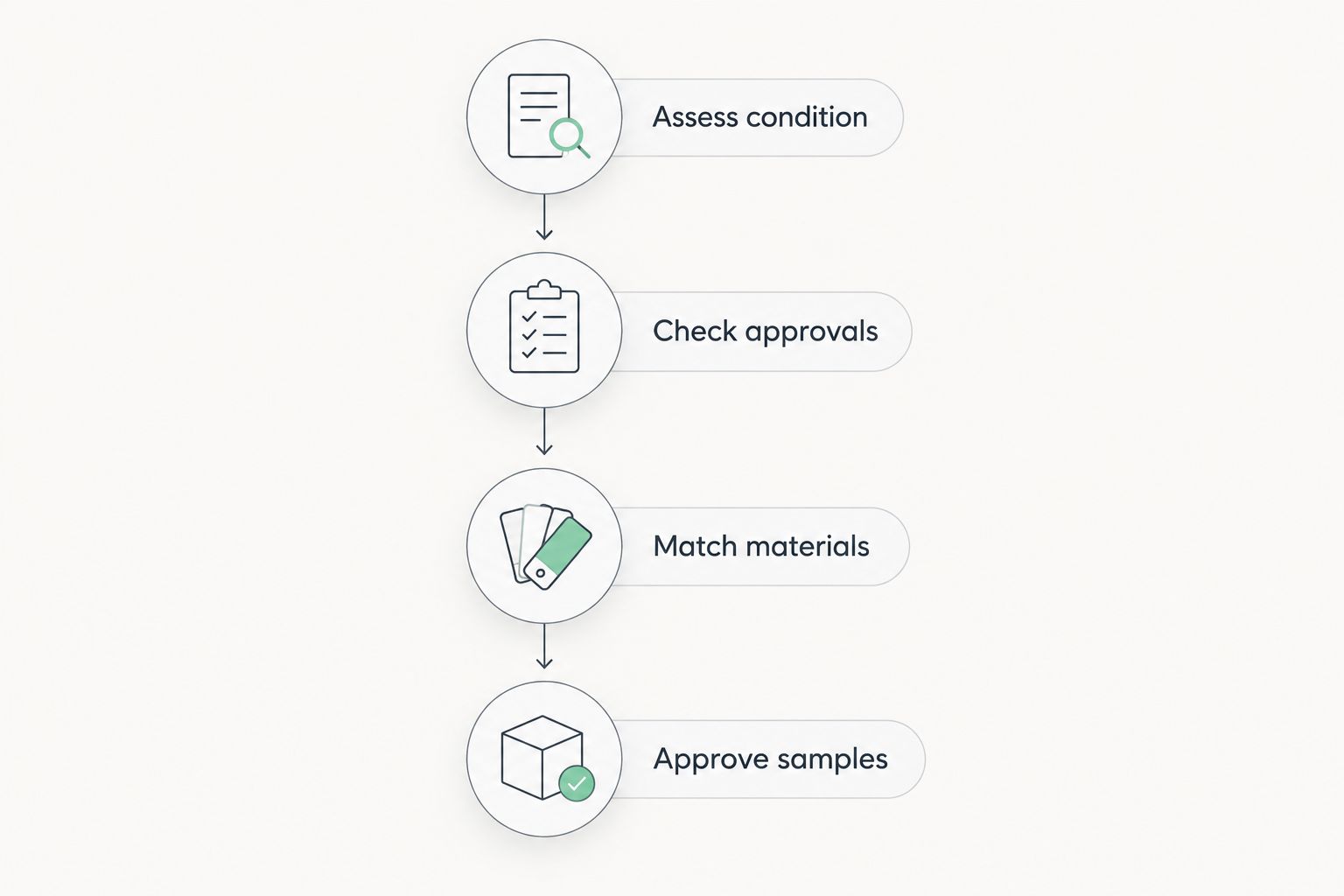
Use this sequence before committing to purchases:
- Assess condition: Identify what failed and what remains sound.
- Check approvals: Establish applicable exterior-review requirements.
- Match materials: Specify physical compatibility and visible details.
- Approve samples: Review representative work before wider installation.
Keep 2 finish sample boards where you are comparing replacement wood finishes. Review them beside the existing detail, not in isolation. This is a selection exercise, not a substitute for assessing the wood underneath.
Your contractor’s proposal should connect each material to a diagnosed condition and an installation method. A&E Construction LLC is a fit for DC owners seeking one general contractor to coordinate renovation work.
FAQ
What's the best material for a historic DC rowhouse façade?
Sound original brick is the first choice where it remains serviceable. Use compatible replacement brick only where needed, and assess mortar and cleaning methods alongside the brick.
Is lime mortar always right for old brick?
No; the mortar formulation must suit the existing brick, mortar, and exposure. Lime content alone does not establish compatibility.
Should I replace historic wood windows?
Assess repairability before replacing historic wood windows. Consider decay, joinery, glazing, hardware, weatherstripping, and installation rather than judging the frame material alone.
Is slate the best roof material for every DC rowhouse?
No; matching slate is a strong choice for repairs to an existing slate roof. Other roof assemblies require their own assessment and material specification.
Can I paint unpainted historic brick in 2026?
Do not assume that unpainted historic brick needs or permits a coating. Confirm preservation-review requirements and assess the masonry before specifying paint or another surface treatment.
Should cracked plaster be replaced with drywall?
Not automatically; repairable historic plaster deserves assessment first. Identify moisture, movement, or attachment problems before deciding between repair and replacement.
Can A&E Construction LLC coordinate a DC rowhouse renovation?
A&E Construction LLC provides full-service general contracting in Washington, DC and Maryland, including residential work. Establish the project-specific preservation scope, specialist responsibilities, and material approvals before construction.
One last thing
For your 2026 renovation, ask for a sample that includes a transition: new mortar against old brick, replacement trim against retained wood, or flashing against the existing roof. That junction reveals whether the specification addresses the building you own rather than an isolated material.
Approve the repair in context before approving it across the house.